
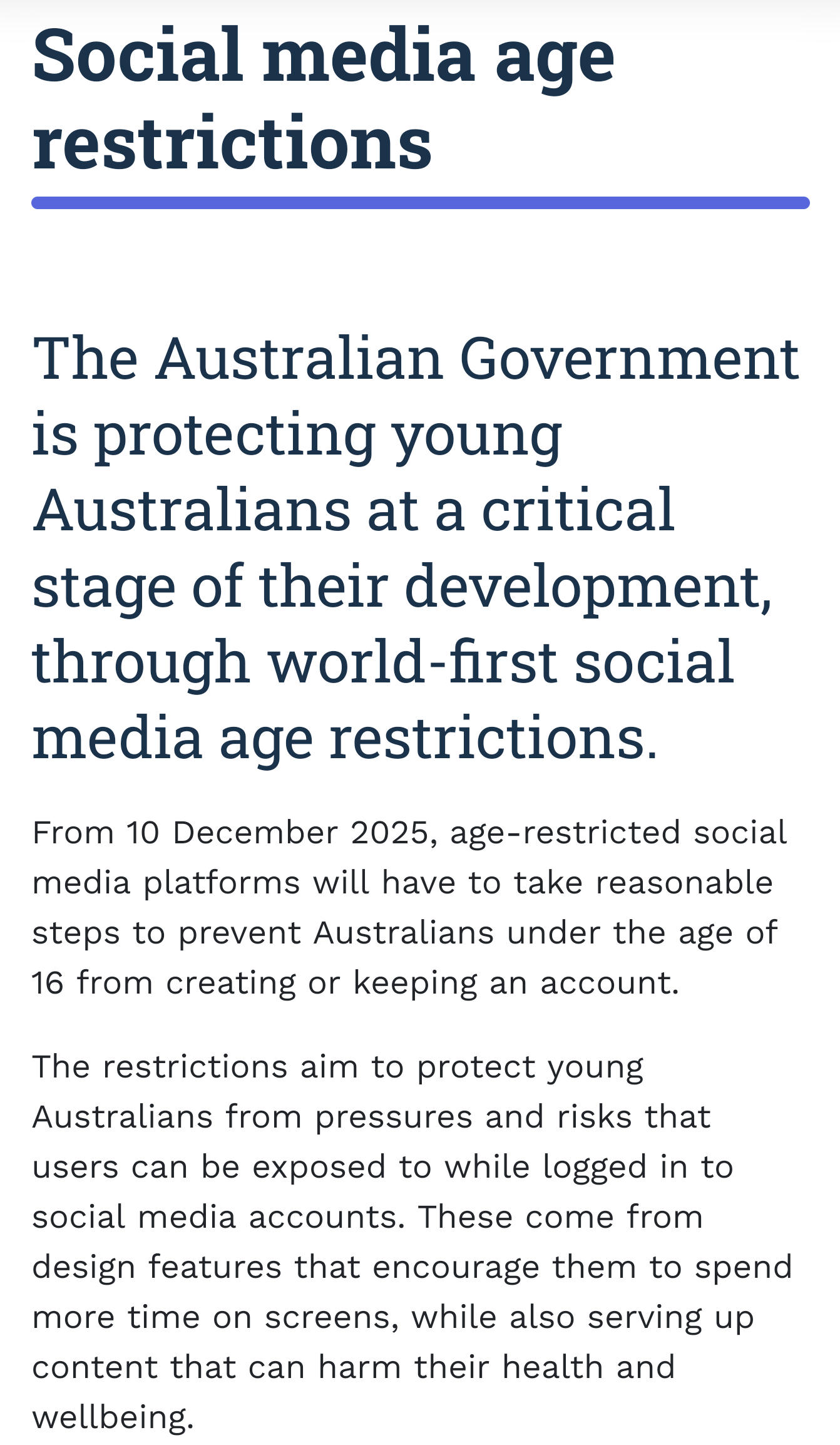
From the 10th of December, anyone under 16 in Australia will no longer be allowed on social media. On paper, it’s framed as a protective measure for young people. In reality, it’s a blunt overreach of power that’s going to hurt not only teenagers but also the small businesses and creative professionals who depend on them.
I’ve already felt the impact firsthand. Over the past month, I’ve had multiple contracts cancelled because the businesses I was working with rely heavily on under-16 social media users.
A local skatewear brand, for instance, paused their Instagram campaign targeting teenage customers, leaving me with weeks of design work that now has no purpose. An independent gaming accessory shop also shelved their TikTok launch aimed at younger audiences. In both cases, the financial damage isn’t just in lost advertising – it’s in lost sales, lost exposure, and lost momentum.
And it hasn’t stopped there. A boutique jewellery label I’ve worked with for over a year pulled the plug on their summer campaign after realising their biggest audience on Instagram were 14 and 15-year-olds saving up for statement pieces. They’d built an entire aesthetic around that demographic – bright visuals, bold messaging, a sense of teenage rebellion – and now it all feels obsolete overnight.
Another client, a small online art supply store, had to scrap a collaboration with a young digital artist whose followers were mostly students under 16. That partnership was meant to drive both engagement and credibility in the youth art community. Now, instead of showcasing Australian creativity, the campaign sits in limbo, and the artist has lost a career-making opportunity before it even began.
Even on a personal level, the ripple effect has been impossible to ignore. My design inquiries have dropped noticeably, and those that do come through are from businesses hesitating to invest in campaigns that might be rendered useless by the new law. One cafe client even joked, “Maybe we should just go back to flyers and chalkboards.” It wasn’t funny, though – it was a sign of fear. A sign that we’re heading backwards.
Sure, people might argue that these businesses could pivot – build websites, launch email campaigns, explore other avenues of marketing. But even with a website, teenagers aren’t just going to stop being trendsetters or advocates for the brands they love. Social media isn’t a nice-to-have tool; it’s the core engine driving engagement and revenue for many of these businesses. Without access to that demographic, even the most creative workarounds will fall short.
What makes this worse is that teenagers will inevitably find ways around the ban. They’ll use family accounts, VPNs, or alternative apps. So the law doesn’t truly protect them, but the businesses that operate legally and ethically are the ones left paying the price. Meanwhile, independent creatives like me – social media designers, marketers, content creators – are losing both income and opportunities to grow our portfolios.
The irony is that the very communities we’re trying to protect – young people exploring creativity, connection, and entrepreneurship – are the ones being silenced. I’ve worked with teens who’ve built handmade brands from scratch, managed their own online shops, and learned real-world skills through digital engagement. This ban doesn’t just shut down their social media; it shuts down their progress.
This isn’t just a policy misstep – it’s a financial hammer hitting small businesses and freelancers who have no say in the legislation. Protective intent is one thing, but when a government action punishes livelihoods while failing to fully achieve its stated goals, it’s hard to call it responsible governance.
If the government genuinely wants to support teenagers online, banning them outright is not the answer. Providing better education, safety tools, and parental controls would be far more effective – and far less destructive to the people whose work fuels small business growth in Australia. The internet has never been perfect, but cutting off an entire generation from participating in its culture isn’t protection – it’s isolation. And for those of us who build, design, and communicate within that culture, it’s the start of a very uncertain future.